Skip to content
KEY PRIORITIES

A Better Tomorrow Starts Today
Pexels shvetsa 3727458

Job Growth & Sustainable Wages

Where We Are Now:
The Appalachian Regional Commission (ARC) has designated Garrett as “a county in transition” –not quite economically distressed, but not quite economically competitive, either –and have reported that our rate of growth is one of the slowest in the state.  Our median income is approximately $48,200, or only about $8 above Maryland minimum wage.  This is equal to about half of the median income for Maryland workers across the state.

Nearly one-third of our rural families qualify as ALICE (Asset Limited, Income Constrained, and Employed) households.  And roughly 15% of our children are living in poverty.

Over the Next Four Years:
IDENTIFY NEEDS OF OUR ECONOMIC SECTORS:  We need a clear path forward for accomplishing goals in our key economic bases of tourism, healthcare, manufacturing, agriculture, and energy.  We, as a community, must engage state government in supporting our local economic sectors.  I will facilitate this engagement, and ensure that we are in alignment with goals driven by The Maryland Department of Planning for growth in Western Maryland.

NEW AND EXPANDED PROJECTS:  We must strategically visualize projects that build upon our assets, and secure state and federal funding, where available, to launch new ideas.  I will foster opportunities to bring new ideas to fruition and launch these new endeavors.

WORKFORCE INITIATIVES:  We cannot lose sight of our workforce –the backbone of Garrett’s economy.  It is important for workers to see their work as meaningful, as well as ensuring long-term financial stability and security.  I will explore creative ways for our workforce to stretch their income and enhance opportunities for workforce development and growth without overburdening business owners.

TRAINING OPPORTUNITIES:  Training programs, apprenticeships, practicums, and hands-on job experiences prepare students, as well as adults already in the workforce, for 21st century jobs.  I will ensure that we have a full and varied array of meaningful workforce skill-building opportunities for both our new and transitioning workers.

NONPROFIT SUPPORT:  Nonprofit organizations provide a variety of services throughout the County.  I will ensure that these organizations have the support they need to grow their vision and be a long-term benefit to our communities.

SUPPORT FOR REMOTE WORKERS:  Maryland has a base of professionals working remotely.  I will fully support our remote workforce in their professional endeavors.

100% BROADBAND CONNECTIVITY:  Garrett must continue to work toward supporting increases in broadband access throughout the County until we realize full access for all regions, and all Garrett residents are connected. 
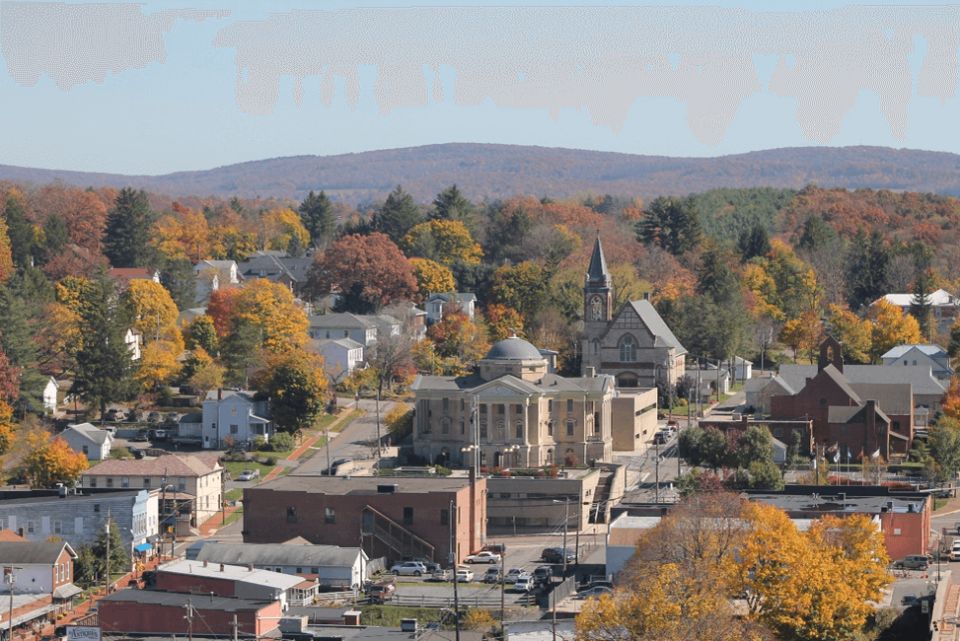
Oakland md a great small town

Affordable Housing & Homelessness

Where We Are Now:
We do not have an adequate new home inventory and much of our existing home inventory lacks quality living conditions.  Approximately one third of our properties are vacant.  For the five years preceding the pandemic, home prices rose significantly, showing an 86% increase in median sales price, while Garrett’s median household income increased by only about 18% during the same period. This trend in outpricing our workers, coupled with our current home inventory which is aging and in need of restoration, presents significant challenges for our labor force. Without an adequate and affordable place to raise their families, workers will leave for a more suitable location that better supports their all-around quality of life.

According to the Maryland Department of Assessments and Taxation, the residential assessable tax base increased by nearly 55% between 2020 and 2023, representing the highest increase among all 24 jurisdictions in the state. This increase in reassessments places a significant burden on existing homeowners who may now struggle to afford their property tax bill on an income which has not experienced comparable gains.

Garrett’s inventory of long-term rental properties is “low to non-existent”, and 80% to 90% of our current subsidized housing portfolio is owned by a single entity, whose housing policies are out of alignment with federal and state regulations, thus causing harm to our most vulnerable and low-income populations (elderly, disabled, those with behavioral health issues –mental health and substance use challenges, victims of domestic violence, and others).  Our Public Housing Authority contract is held by the same organization –which causes a conflict of interest when it comes to upholding the rights of these tenants in publicly subsidized housing.

Seniors (living on fixed incomes) are struggling to afford housing.  Garrett is nearly devoid of affordable housing designed specifically for older adults, and these residents are inevitably forced to sleep outside, in vehicles, in sheds, and abandoned buildings.

Over the Next Four Years:

ACCESS TO HOMES:  We need places to live in order to raise a family.  We must be able to live affordably whether we rent or purchase a home –and have a valued role in our communities.  Adequately housing our residents is an issue that must be tackled at both the local and state level.

HOUSING PROGRAMS:  Garrett’s Economic Development Strategic Plan – 2023-2027 recommends          1) expanding homebuyer programs, and 2) expanding home rehabilitation programs –which can be accomplished with state and/or federal funds.  The Plan also suggests providing incentives for homebuilders –like reimbursing them for impact fees once homes are occupied and providing a perpetual tax base increase for the County.

FEDERAL INITIATIVES:  New federal housing initiatives, under Scott Turner, Secretary of Housing and Urban Development, are striving to fix publicly funded housing systems, despite liberal notions that millions of dollars should be paid to locally operated Public Housing Authorities and homeless systems of care –enterprises that fail to comply with federal regulations and state laws with absolutely no oversight; that continue to pay market rate rents of as much as $2,000 / month for a single individual, while three other eligible individuals await services for years while receiving $0 in assistance; while a shelter with a 6 million dollar budget sees daily overdoses without any type of treatment, referral, or support services for its substance-addicted clients; and while clients with Serious Mental Illness (SMI) are placed in apartments where they receive absolutely no support and live in isolation and despair.  Our status quo housing system is unsustainable, yet our Maryland systems of care, instead of fixing our severely broken system, have instead sued the federal government –purportedly so that the current system, fraught with waste, mismanagement, poor outcomes, and corruption, can continue unabated.  Our state must work to end the affordable housing / homelessness crisis –not fight for a broken system that fails our Marylanders year after year.

HOUSING SERVICES:  Programs for homeless individuals must provide services –i.e. mental health and substance-use disorder treatment, work readiness and job support, education and training, legal services, etc. if people are to successfully lead an independent life that involves all of the responsibilities that come with maintaining a home.

MARYLAND’S PUBLIC HOUSING SYSTEM:  Our Public Housing Authorities must operate in compliance with federal and state laws, and our state government must hold them accountable for allocating federal assistance in alignment with state and federal law.

REDUCE AND ELIMINATE FRAUD, MISMANAGEMENT, AND NONCOMPLIANCE:  State legislators must enforce new HUD initiatives on a state level that seek to reduce and eliminate fraud and waste in our public housing and shelter systems.  This will require increased collaboration and coordination between our statewide housing representatives and our state agencies.

BUILD A SERVICES CONTINUUM THAT WORKS!  It is up to our state officials to ensure –now, more than ever, that a full continuum of housing is available to all –from those most vulnerable who have lost their housing, to young families struggling to build a prosperous future.  We CAN do better!

SUPPORT FOR OUR SMALL TOWNS:  We must ensure that the state supports our small towns.  In order to maintain a sense of community we must retain our schools; establish vibrant community centers; refurbish aged housing; and ensure meaningful and financially sustainable work opportunities for our towns’ residents. 

 
Pexels shkrabaanthony 5214997

Accessible Healthcare

Where We Are Now:
Garrett has a severe shortage of healthcare specialists: 
  • For every 2,050 residents, we have 1 Primary Care Physician, compared to a statewide average of 1 per 1,180 residents; 
  • For every 370 residents there is 1 Mental Health Provider, in contrast to the statewide average of 1 per 270 residents; 
  • For every 2,040 residents there is 1 dentist, in contrast to 1 per every 1,240 Marylanders. 

Garrett County citizens deserve to have a full Behavioral Health Continuum of Care so that they can receive the treatment they need when they need it.  But due to a lack of services, we instead have policies that exile our residents in crisis out of county when they manifest behaviors related to their mental health or problematic substance use.  These policies basically create an experience of forced abandonment by family and community –patients lose the very resources that contribute to their wellness the most.  We must have the full array of behavioral health treatment –from emergency hospitalization, to residential recovery programs, to all modalities of outpatient treatment.

Our youth are at serious risk. The Youth Risk Behavior Survey (YRBS) is given to students in schools across the nation, and is the most authoritative resource indicating the well-being of young people attending public middle and high schools in jurisdictions throughout the United States.  The Garrett County data is concerning:
  • SUICIDALITY:  Nearly half of our high school girls, who took the most recent YRBS, reported that they felt “sad or hopeless almost every day”, and a quarter of them have “seriously considered attempting suicide”, and approximately one fifth have “made a plan about how [they] would attempt suicide”.  110 Garrett County high school students (18%) reported that they have attempted suicide at least once in the past year.  Additionally, 28% of all high school students reported that their mental health was “not good” most of the time or always.
  • HUNGER:  94 of our high school students reported that their “family worried that food would run out before [they] got money to buy more”; with 69 reporting that “the food [their] family bought [did] not last and they did not have money to get more”. 
  • FAMILY DYSFUNCTION:  179 high school students reported that they have “lived with someone who was having a problem with alcohol or drug use”; while 207 reported that they “lived with someone who was depressed, mentally ill, or suicidal”.  Additionally, 170 high school students live with domestic violence in the home, reporting that “parents or other adults in [their] home slapped, hit, kicked, punched, or beat each other up”. 

Our most recent County Behavioral Health Survey (2024) indicated that depression (according to 92% of respondents) and anxiety (according to 84% of respondents) were the most significant mental health issues that we face –but we lack sufficient or appropriate services to resolve these problems for people who are seeking help.

Over the Next Four Years:

INCENTIVES:  We must work with the state to create incentives for healthcare professionals to live and work in rural areas of the state, including Garrett.  We must figure out how to create full continuums (levels of care) for both somatic (physical) illness and behavioral health (mental health and substance-use) disorders.

SUPPORT A HEALTHCARE INFRASTRUCTURE:  We must better support, through state funding opportunities, educational programs for rural healthcare professionals, projects that support healthcare prevention and wellness in rural areas, and efforts to ensure that affordable care is accessible at the time it is needed.

FAMILY SUPPORT & YOUTH OUTREACH:  Wellness resources for youth and young adults must be explored and made available in all jurisdictions of the county, and we must expand outreach services to families.  State grants are available for these programs. 


Together We Can Make a Difference
________